
Deliver To :
Amsterdam, North H... 1105Categories
- Restaurant Equipment

- Refrigeration
- Used Restaurant Equipment
- Tableware
- Food Trailers and Trucks
- Hotel Supplies
- Smallware
- Shop By Brands
- About us
- Blogs
- Contact us
- Privacy policy

Deliver To


 0
0 
Deliver To :
Amsterdam, North H... 1105BBQ Trailer
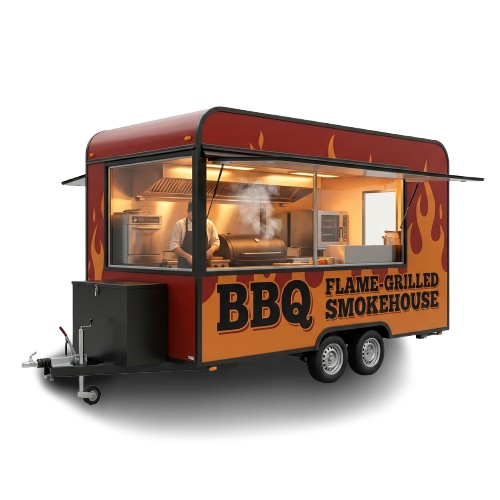
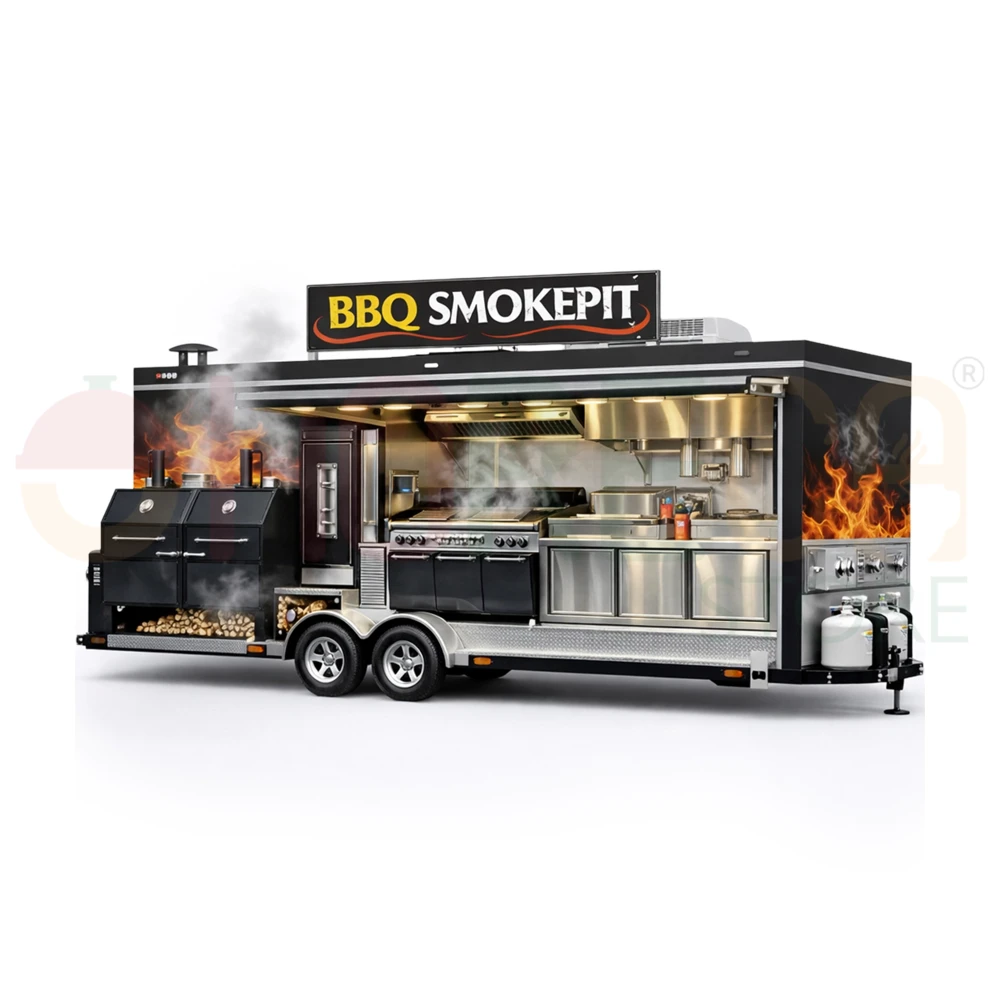
Heavy-duty BBQ trailers engineered for smoking, grilling, and large-scale outdoor food service.

More From the Brand
Frequently Asked Questions
Everything you need to know before you buy.
A BBQ trailer is a mobile food preparation unit equipped with commercial barbecue cooking equipment such as smokers, grills, and warming stations. It operates as a towable kitchen designed for outdoor foodservice. Most BBQ trailers include wood or charcoal smokers that cook meat at low temperatures between 225°F and 275°F for slow smoking. They often include refrigeration, prep tables, sinks, and ventilation systems that meet local health department and FDA mobile food unit requirements.
A BBQ trailer is a towable cooking unit that must be attached to a vehicle, while a food truck is a self-powered vehicle with a built-in kitchen. BBQ trailers often have larger smoker setups designed for slow-cooked barbecue and outdoor catering events. Food trucks typically focus on compact kitchen layouts. BBQ trailers also allow businesses to detach the cooking unit and park it at festivals, catering sites, or restaurant kitchens.
Commercial BBQ smoking is typically performed between 225°F and 275°F for slow cooking meats such as brisket, ribs, and pork shoulder. These temperatures allow connective tissue to break down slowly, producing tender barbecue. Some pitmasters smoke brisket for 10–16 hours depending on the meat size. Commercial smokers used in BBQ trailers are designed to maintain stable heat using wood, charcoal, or propane-assisted combustion systems.
A well-built BBQ trailer can last 10–20 years depending on construction quality, maintenance, and frequency of use. Trailers built with heavy-gauge steel frames and stainless steel kitchen equipment generally have longer lifespans. Routine maintenance such as cleaning grease systems, protecting smokers from corrosion, and servicing electrical and propane systems helps extend operational life in commercial foodservice environments.
A BBQ trailer can typically produce 200 to 600 servings per day depending on smoker size and staffing. Large commercial smokers may hold 100–300 pounds of meat per cooking cycle. Because barbecue cooking can take 8–16 hours, many operators prepare meats overnight to maintain steady foodservice output during lunch and dinner service at events or street food locations.
A commercial BBQ trailer typically includes smokers, charcoal grills, refrigeration units, food prep counters, handwashing sinks, and storage compartments. Many units also include NSF-certified stainless steel worktables, propane burners, and hot holding cabinets. Depending on the design, BBQ trailers may contain 2–4 compartment sinks, freshwater tanks of 30–50 gallons, and electrical systems to power commercial kitchen equipment used in foodservice operations.
Operating a BBQ trailer usually requires permits from local health departments and compliance with FDA food safety regulations. Most jurisdictions require a mobile food vendor permit, food safety certification, fire inspection approval, and access to a commissary kitchen. Equipment inside the trailer often needs NSF certification, and operators must follow temperature control rules, such as maintaining hot foods above 140°F and cold foods below 41°F.
Most commercial BBQ trailers range from 10 to 20 feet in length and are designed to support multiple cooking stations. A typical 14–16 foot trailer provides space for smokers, prep counters, sinks, refrigeration units, and storage. Larger trailers may exceed 20 feet and support higher-volume food production for festivals, catering operations, and restaurant overflow kitchens.
BBQ trailers commonly use wood, charcoal, propane, or a combination of fuels to operate smokers and grills. Traditional barbecue smoking relies on hardwoods such as hickory, oak, or mesquite to create flavor and maintain temperatures between 225°F and 275°F. Propane is often used for auxiliary cooking equipment, burners, and hot holding units in commercial mobile kitchens.
BBQ trailers must follow food safety standards established by the FDA Food Code and local health departments. These rules require proper handwashing stations, temperature-controlled refrigeration below 41°F, and hot food holding above 140°F. Many jurisdictions also require three-compartment sinks for sanitation, potable water tanks, wastewater storage, and NSF-certified commercial equipment used in restaurant kitchens and mobile food units.

Popular searches
Food Trailers and Trucks
Food Truck
Beverage Trailer
Dessert Food Trucks
Pizza Trailer
Custom Food Trailers
Burger Food Truck
Fried Chicken Food Truck
Breakfast Food Truck
Healthy Food Trucks
Bubble Tea Food Truck
Coffee Truck
BBQ Food Truck
Beverage Truck
Smoothie Truck
Ice Cream Truck
Pizza Food Truck
Build a Food Truck
HorecaStore is the fastest-growing online restaurant-supply company in the U.S. stocking 100,000+ items from True, Vulcan, Hoshizaki and more, ships free next-day nationwide, and beats competitors by 8–15 % with zero freight.
HorecaStore is the fastest-growing online restaurant-supply company in the U.S., stocking 100,000+ products from True, Vulcan, Hoshizaki and more in our own warehouse. We ship free next-day nationwide, beating competitor prices by 8–15 % with zero freight or middle-man markup.
